Pasture Alchemy: 4 Steps to Turn Grass into Gold
For years, alchemists strived to turn base metals into gold. They’re still trying – but if you’re a UK grass farmer, here are four simple steps to get the most from your pastures with Barenbrug’s ‘pasture alchemy’.
The best thing about our take on alchemy is that it’s all down to you. There’s no magic to learn, no secret sauce, no mumbo-jumbo or being asked to put your faith (or your money!) into questionable products or services.
But – and this is the only point at which we'll implore you to read on – with this incredibly simple but effective plan for grass success. No matter where you farm in the UK, no matter what soil you’re on, no matter what your style, ambition or production goals, the four steps we're about to describe to you will – if followed accurately – produce better grass on your farm.
It all starts with the time-proven Mark One eyeball.
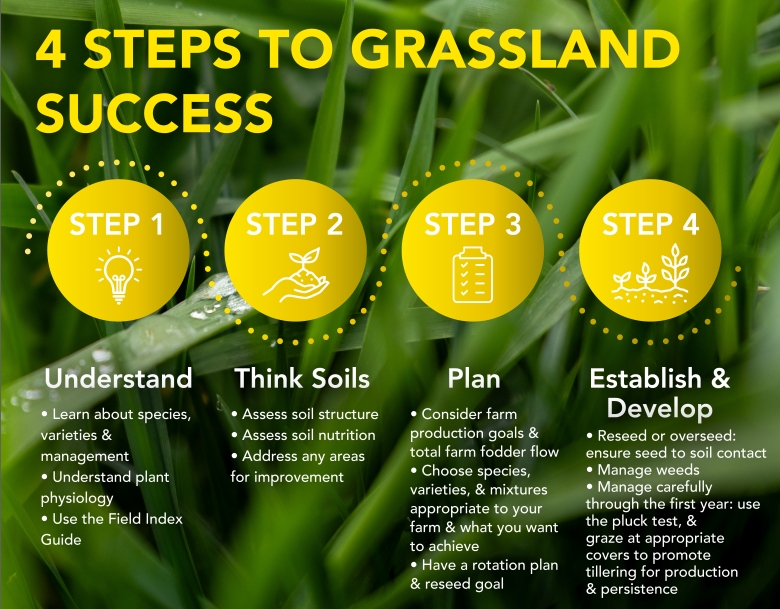
Step 1 - Understand
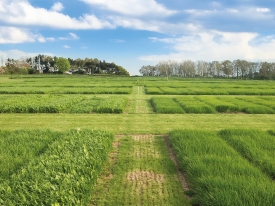
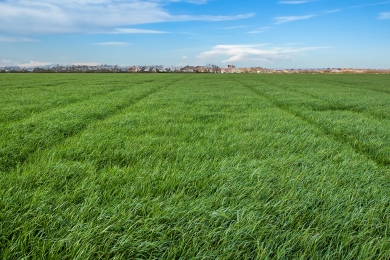
Field indexing – getting out there in the fields and giving every one a close, considered inspection – gives you fact, not feeling, for how your grass is doing. Not everything green is gold so, by assessing each field on its merits (or obvious problems), you’ve immediately built yourself a priority list of what’s working and what’s not.
Ideally, you conduct your field indexing against the objectives you have for each field: what does it do for your business/enterprise/farm? Which fields are for conservation, early or late grazing, youngstock, resilience, etc?
While field indexing provides the understanding, it’s the next step – soils – that put that into context.
Step 2 – Think Soils
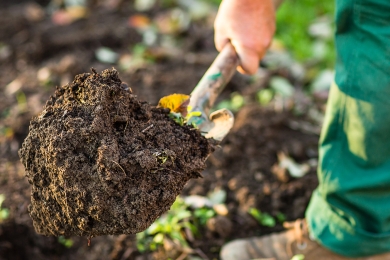
Soil structure, nutrient status, drainage, compaction, pH – these are the parameters needed to allow you to see your pasture index in the right light: the opportunities for improvement, the limiting factors that are outside your control. Understanding these interactions, and the effects on grass growth and quality, allows you to actively shape your grass strategy – rather than accepting that it’s your land and soil that will shape your grass strategy.
Again, this isn’t to say that you can turn every field from a poorly performing index of 1 into a top-notch index of 5. But by mapping indices against soil characteristics, you can understand where reseeding or overseeding can deliver the best returns – and the specific, bespoke actions that will add further granularity to your decision-making.
For example, if you’ve 40 fields on your farm, you’ll end up with a list where each entry displays a field’s pasture index, alongside notes about soil and other characteristics. This won’t just allow you to identify the best-performing fields (and thus the fields likely to provide the best return on inputs). It will also allow you to rationalise his management of the lower-performing fields: limiting factors present in some fields make them incapable of ever being scored above a 3.
Nevertheless, it’s still possible to extract maximum performance from them – realising their production potential – even if it will never reach the top tier.
That’s how you develop the third step – The Plan.
Step 3 - Plan
We liken this stage to a game of three-dimensional chess: sounds difficult, but provided your strategy is sound, once you grasp the multi-dimensional aspect everything falls into place.
The key is understanding the demands your production goals place on your grass strategy. So, this is about – if we’re talking litres of milk, for example – when you need grass, how much you need, and what its characteristics should be. Mapping this to your grassland indices gives you a framework for management priorities, and how other factors – budgets, labour and machinery availability – might influence this.
Matching fields with appropriate species is the next stage. Some fields will suit ryegrass and it will grow reliably. Others may be better off with a range of species – cocksfoot, tall fescues, timothy – that will allow you to manage those fields to the best of their potential, without them becoming a ‘money pit’ for inputs.
Think about it. Few farmers will ever be in the fortunate position to boast a uniform 5 across all their fields. But if you can take just one field upwards from a 4, that’s going to be an improvement. Likewise, is it worth concentrating resources on bringing fields up from a 1, when you’ve got a field that if brought from a 3 to a 2.5 will represent a huge extra tonnage of fodder?
Step 4 – Establish & Develop
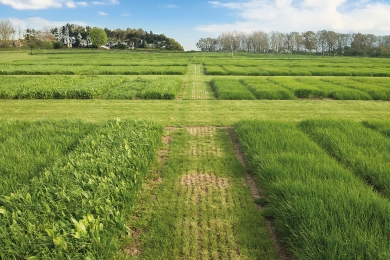
Choose field by field which ones are your priorities, which ones could be better managed in time (perhaps with a medium-term goal of diversifying the sward, say) and those which might be better taken out of regular rotation altogether. Put more realistic expectations on the lower-performing swards; ask more of the higher indices if soil data suggests they have more still to give.
There you have it: four simple steps. Naturally, they’re not linear – it’s an ongoing cycle, where the feedback is continuous and acted upon. If you’ve got this far, I hope you’ll see the simplicity we promised – and why it really does seem like alchemy in action, in turning grass into gold.