Grow Your Future With Grass
Sustain your farm’s resilience by maximising homegrown forage
If you have livestock, what would you say is your farm’s most productive asset? You may say it’s your dairy cows, or your breeding ewes. We believe it’s your grassland!
There is no mystery in the benefits of well-managed grassland, providing a source of quality nutrient-rich forage as well as increased farm biodiversity, increased soil health, the potential for reduced inputs, and one of the most sustainable cost-effective feed for livestock farmers. Grow Your Future With Grass – sustain your farms resilience by maximising your grassland.
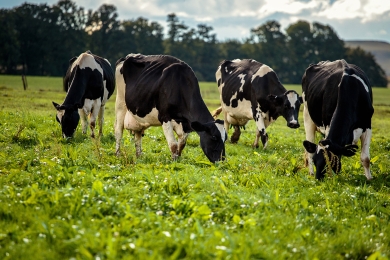
The value of your grass
Grass remains the most cost-effective livestock feed. It is the primary source of quality, nutrient-rich forage which, when managed well, will increase farm biodiversity and soil health while maximising farm productivity, resilience and sustainability. With the potential to reduce inputs, both in fertiliser and brought in feed, and produce a high-quality feed, this translates into increased grass yield and more litres of milk and animal weight from more nutritious forage, while supporting animal health and maintaining overall farm productivity.
All too often we take grass for granted: if the field looks green, it must be healthy, and if we’re getting plenty of bales from it, it must be productive, however grassland can often be old and tired, with weeds and little of the original selected productive species left.
How to increase your grassland productivity
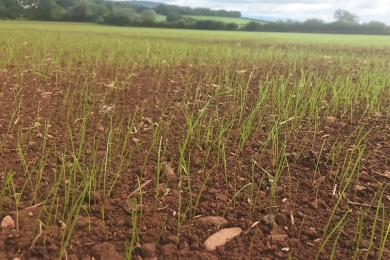
Increasing your grassland productivity will at some point mean reseeding, ensuring the highest performing species are available. But what does that really mean? Grassland will always see weed ingress; this reduces the quality of the field overall as the original productive species is no longer available. Overtime, more and more weeds will take over - taking a highly productive field at GI5 (Grass Index 5) down to a field with low productivity of GI1 (Grass Index 1). Find out more about Barenbrug’s Grassland Index Guide.
Research shows that just one year after reseeding, weed species can make up to 18% of a sward. After four years, that figure has more than doubled to 38% and, after eight years, weeds will be starting to dominate the sward. The highest performing grassland is at GI5, where the original selected productive species makes at least 80%, resulting in maximum productivity to deliver more energy resulting in more weight gain and higher milk yields. Maintaining your grassland at maximum productivity (GI5), by reseeding or overseeding poor performing fields, will make your grassland your most productive asset.
Research shows that one of the biggest barriers to reseeding old pastures is cost, in particular worry about return on investment. “Reseeding is a big cost, there’s no doubt,” says David Linton, Barenbrug UK's Agriculture Commercial Manager. “But don’t fixate on the cost of the machinery, labour, fuel, seed, fertiliser – instead focus on the long-term benefits secured by reseeding. First of all, be assured that grass seed is far from the most expensive part of a reseed. Then consider that you’re planting a crop that’s going to yield continuously for at least five years and probably more.”
A reseed might need an investment of around £900/ha, dependent on soil type and other factors. But if reseeding a low performing field-GI3 (50% sown species and 50% weed species) - to achieve a GI5 then the first year will offer 15tDM/ha, against just 7tDM/ha from a GI3. With a DM value of £140/t, that’s an additional £1,120 in increased yield.
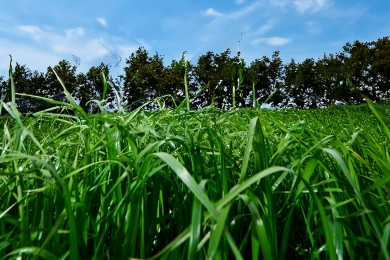
“We don’t tend to think about grass as a crop in the same way we regard wheat or barley. Yet modern grass varieties are as carefully bred and selected as any cereal variety, offering valuable new genetics that confer better quality, improved disease resistance, and a significant jump in yield potential. “By adopting a cropping mindset – ‘what does the crop need to achieve its greatest return?’ – livestock farmers can absolutely turbo-charge this most productive of farm assets,” stresses David. Focus on what the crop needs to achieve the greatest return, by maximising and improving it each year. Grassland farmers need to be replacing nutrients following a cut and taking soil samples to monitor crop performance. By feeding and managing the soil, grass can reach its full potential.
We believe you can Grow Your Future with Grass to help sustain farm resilience, and want to reinvigorate thinking about the value of good grassland – how it can elevate productivity, make more efficient use of inputs and provide environmental benefits.