4 Steps to Success - Step 1: Understand
UNDERSTAND
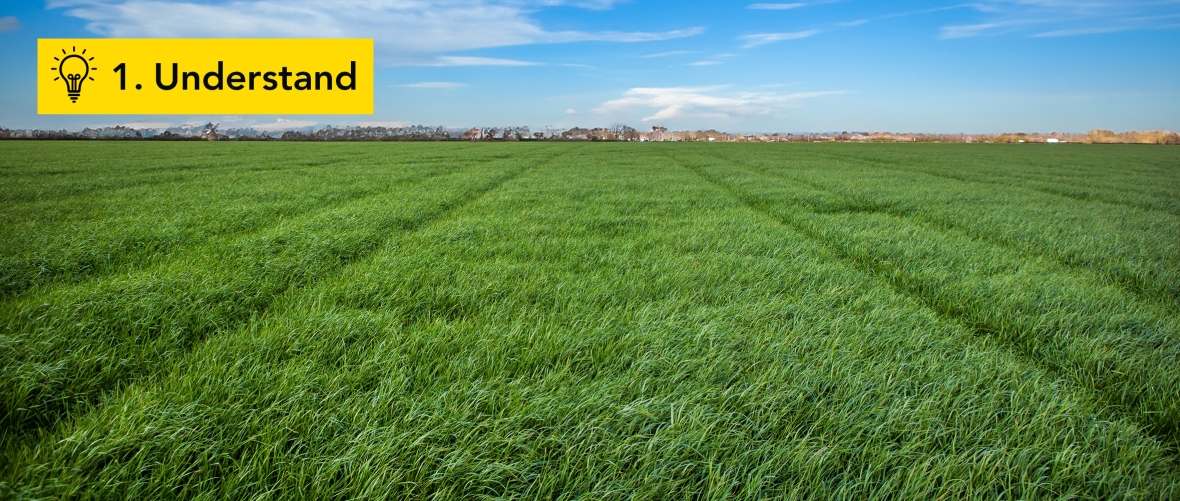
All farmers are used to looking at the condition of their stock with most using the 1 to 5 condition index as a way of monitoring performance. We apply a similar principle to gauging grass quality - with 5 being a good sward that is highly productive, and 1 being a field that needs addressing straight away.
Find out how to apply our field indexing system to monitor your sward so you can maximise your profit from good grass. The first step is to complete a visual assessment of your field/s.
INDEX 1
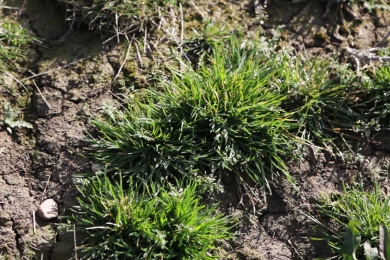
This field is past its best and is classed as an INDEX 1
HOW TO SCORE
Walk the field and assess grass content.
An Index 1 field will have less than 25% sown, productive species left in the field and the ryegrass that remains will be of very poor quality.
The gaps created by the disappearing ryegrass have been filled up with broad-leaved weeds and weed grasses like annual meadowgrass, yorkshire fog, bent grasses, chewings fescue and strong creeping red fescue.
All these weed grasses are totally unproductive to the field, delivering less than 25% of what perennial ryegrass will produce.
An index 1 field will deteriorate quicker than other fields as it is not wear tolerant, so will not be able to resist poaching by grazing animals.
WHAT THIS MEANS
A field with a classification of Index 1 is not nutritious, has no feed value and is therefore of no use to ruminant livestock.
WHAT TO DO
The field has gone past that stage of being profitable.
It isn’t worth putting any fertiliser on the grass that is left as it will not be used efficiently (you'll get around 10-15% efficiency from the fertiliser that is applied).
In this situation, with less than 25% of productivity from the field, the best course of action is to plough it up the field and start again with a re-seed.
INDEX 2
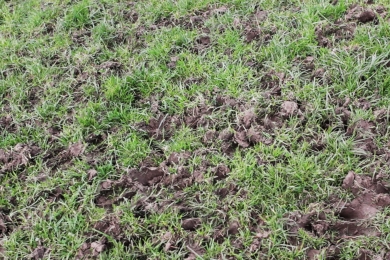
There is evidence throughout this field that it has been considerably damaged by overwintering of stock - making it an INDEX 2.
HOW TO SCORE
Walk the field and assess grass content.
An INDEX 2 field will have less than 40% sown, productive species with less than 10% clover (if sown), coupled with more than 40% weed content or gaps.
The sward will be very open.
There is some ryegrass left in the field, but it is of very poor quality.
This could be because of a number of factors including poor weather or lack of density in the existing sward.
WHAT THIS MEANS
A field at INDEX 2 needs to be looked at immediately. If something is not done with this field very soon it will be a complete write-off.
WHAT TO DO
We do still have a couple of options available to fix an INDEX 2 field.
1) Burn off the existing sward and completely reseed
2) Use the less expensive options and overseed.
When considering overseeding, we suggest using national recommended lists and consider varieties on sward density, palatability and yield.
Overseeding this sward could easily turn it from an INDEX 2 to an INDEX 3 or 4 and we could get three to four extra years production from the field without having to do a complete reseed.
INDEX 3
This field is five years old.
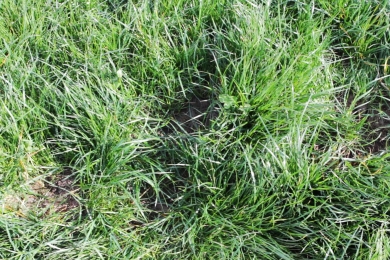
There are lots of open spaces and this is allowing plenty of room for weeds (such as docks) to come in and dominate the sward, meaning this can be classed as an INDEX 3....
HOW TO SCORE
Walk the field and assess grass content.
An INDEX 3 field will have a total of 50-60% sown, productive species (including any clover at less than 10%, if sown).
It will also have approximately 40% weeds or gaps.
There will be docks covering around 20-25% of the field and at this level it means you are losing up to a quarter of yield from it.
WHAT THIS MEANS
At Index 3, the field is in an ideal situation to correct the problem and extend the life of the pasture.
WHAT TO DO
This is an ideal stage to correct the problem.
Between March and April, the docks are healthy and actively growing, with good weather conditions. To tackle docks, use an overall spray such as Dockstar Pro.
Once the docks have been removed, overseed with quality grass seed to get productivity back into the sward before weeds get a chance to thrive in bare earth.
Follow manufacturers instructions in regards to when to over sow after using a herbicide to avoid any issues with young grass seedlings.
This is also an ideal time to add clover. This will boost the durability of the sward, extending its lifetime by a couple of years.
INDEX 4
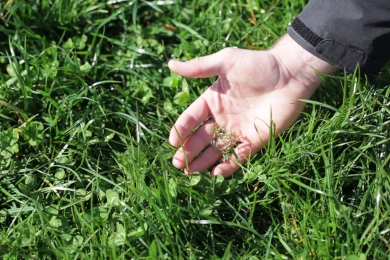
Some parts of this field are starting to show signs of low level damage. Grass growth is less vigorous with some weeds visible; however, there are still plenty of healthy target plants in the sward...
HOW TO SCORE
Walk the field and assess grass content.
The goal is tio achieve as dense sward as possible to elminate any invasion of unproductive species.
An INDEX 4 field will have a total of 60-70% sown, productive species (with ryegrass content of 60-70%, and clover making up 30-40% of the plant population).
If these levels of productive species content are achieved the clover will be adding 170-220kg N/ha/yr, coupled with a high protein content of 27%, which helps ensure high animal performance.
WHAT THIS MEANS
This field will be good for the coming season, but it will have to be monitored and planned improvement (overseeding) will be needed if the productive species drops below 60%.
WHAT TO DO
In these swards nutritional quality will generally not constrain animal performance. The energy content of good, well-grazed ryegrass swards is consistent at above 11.5 MJ/kg DM.
Nitrogen can influence the plant’s ability to tiller. The more tillers ryegrass plants have, the denser they are, and the less prone they are to weed invasion, which is one of the reasons why clover is so important.
To keep on top of an INDEX 4 field you need to check soil fertility regularly and apply a light application of summer Nitrogen to encourage tillering.
This field will probably be good for the coming season but if the ryegrass content drops below 60% it will require further action.
INDEX 5
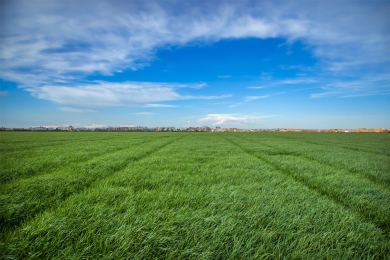
This is a nice healthy sward, with a high content of productive grasses, creating a nice tight, dense sward and can be classed as an INDEX 5.
HOW TO SCORE
Walk the field and assess grass content.
An Index 5 field will have at least 80% sown, productive species (with clover making up 30-40% of the plant population)
There will be minimal weed content or gaps.
WHAT THIS MEANS
The key here is to maintain the field at this level and use it as an example to get as many fields up to this level as possible.
WHAT TO DO
In order to maintain a sward like this it is important to have good fertility.
Regular soil sampling, every three to five years, will ensure you monitor where you are and what what you need to focus on.
50% of UK grassland soils tested have a pH of between 5 and 6. A pH of 5 means the grassland has a maximum yield potential of around 88%.
When planning a liming policy it is important to aim for maintaining pHs of 6 or above.
Regular soil sampling will also give you Phosphate and Potash indices.
The use of Nutrient Management Guide (RB 209) gives recommendations for all cutting and grazing regimes for Phosphate and Potash, Nitrogen and Sulphur fertilisers as well as values for slurry and farmyard manure. All of these need to be taken into account when planning a fertiliser regime.