Five Essential Steps for Strong, Resilient Grassland
With Barenbrug’s agriculture commercial manager, David Linton
I saw a post on social media recently: January is just the rehearsal; February is the main event.
What it’s getting at is that you need time to prepare yourself for the year ahead. Make your plans and set your goals, so that when the main season arrives, you’re ready for the real action – knowing that you’re going to make a success of it.
So why not apply that thinking to grassland management? I thought to myself. Is it possible to mentally prepare for the season ahead? What things would you need to focus on?
It’s these five I picked as being the most important.

1. Soil tests
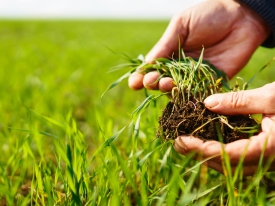
Soil’s a great place to start. If you haven’t tested fields recently, then they’re likely to be underperforming. Use the classic ‘W’ pattern to collect cores from across the field, send them off for an inexpensive soil test, and know where you stand on micronutrient levels – N, P and K – and pH.
Where fields are below-par on phosphate and potash – optimum is Index 2 – you’ll often find lower-quality grasses dominating, at the expense of PRG. An incorrect pH can impede the plant’s ability to make use of the available soil nutrients.
2. Nutrient management plans
Compile the results to create a nutrient management plan that considers nutrients generated on-farm, and how much bought-in fertiliser you’ll need to address the balance. Through careful (or improved) management of the former, you may well find you can afford to use less of the latter.
Addressing soil imbalances can make a huge difference to grass production: potash and phosphate deficiencies can see dry matter yields drop by up to 20%. As a means of maximising grass production (and reducing reliance on bought-in feeds), soil remediation is all too often overlooked.

3. Three-leaf theory
Very simple, this, but get it right and you’re on the road to quality grass.
A perennial ryegrass plant can only grow three live leaves. When a fourth leaf starts to grow, the oldest leaf dies off. As soon as that leaf starts to die, the quality of your sward declines with it.
The ‘trick’, if you like, is to always keep grass growth between 2nd and 3rd leaf. This is the ‘linear phase’. It’s when grass will always give you its peak performance for the resources (soil, above) available to it.
Find out more about the three-leaf theory.
4. Daughters first
Millions of individual ryegrass plants create a productive sward. But to get the most from it, think ‘plant’ and not ‘sward’: manage the individual plants, and the sward will look after itself. You’re already on that path having read about three-leaf theory; now it’s time to hear about daughter tillers.
You’re already aiming to cut silage at around the 2–3 leaf stage, to prevent the dip in quality that will result from the fourth leaf starting to grow. But there’s another plant management advantage here, too.
That’s because at 2–3 leaves, you’re cutting before the ryegrass heads. When you cut off the head – the reproductive part of the plant – you ‘reset’ it. It switches its energy back into vegetative reproduction, which means it uses tillers to reproduce instead.
Every ryegrass tiller can produce up to three daughter tillers, which in turn can each produce a new plant. More plants, denser swards, increased production.
But it’s also a ‘failsafe’ mechanism. More tillers protect the sward against adverse events, such as drought. The more tillers you have, the more you can afford to lose, without losing everything. It’s an insurance policy for the sward.

5. Dry or wet?
It’s the big question. How will the season turn out, weatherwise? We don’t have a crystal ball to tell us, but preparation for either scenario can help to minimise the impact.
Having a clear set of production goals is crucial. A whole-farm grassland plan makes allowances for both extremes. For example, you can plan some fields strategically with mixed swards, to ensure that you can have grazing available in all but the driest conditions, allowing you to reduce reliance on PRG-heavy fields until soil moisture returns.
Equally, your plan will show how fields with intractable drainage issues can be similarly shut out of production during wetter spells, preventing the poaching and soil damage that will reduce sward quality by allowing weeds and poorer grasses to barge their way in.
So fire up your enthusiasm, build your grass production plan around these five points, focus your mind, look forward to feeling more in control – and enjoy seeing your efforts rewarded with better grass.