Heading For Quality Silage
Barenbrug UK’s Agriculture Product Manager, Janet Montgomery, says managing silage swards for quality is a sure-fire step towards building-in resilience.
A Dry Spring Raises Concerns
OK. It’s still too early to call how this year will turn out, weather wise.
But based on the evidence so far, we’ve had the driest spring on record. Never say never, but at more than half-way through the third month of meteorological spring, we’ll need rain in biblical amounts over the next fortnight to have any chance of shifting the dial.
And whatever faith you might place in the accuracy of the medium to long-term forecasts – I won’t pass comment – the feeling from many quarters is that we might be facing another year of dry. Certainly, that’s the view of the Environment Agency, which has warned of a ‘medium’ risk of a summer drought.
Average spring rainfall for the UK typically runs at 229mm. That we’ve had only 80mm so far is simultaneously revealing and concealing. Countrywide, rainfall is rarely consistent; within that cumulative figure are several areas that have trended well below the long-term average. In parts of the Cotswolds, for example, just 25mm of rain have fallen since the beginning of March. In the spring that preceded the country’s last great drought, in 1976, the equivalent figure was 40mm…
A Silaging Season Unlike Last Year
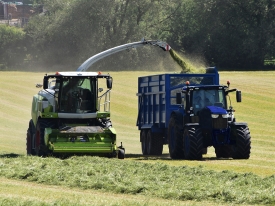
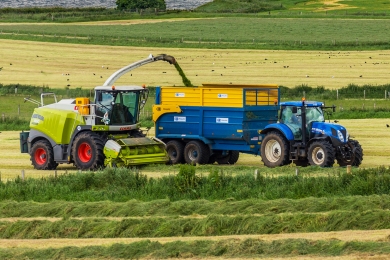
Now, all of this is a roundabout way of confirming that we’re facing a very different silaging year to 2024. Last year’s wet spring, followed by a cool summer, left many farmers in a ‘smash and grab’ situation, forced to cut at the first opportunity for fear of missing a rare window in an unsettled season. Quality took a big hit.
In 2025, the ‘improved’ weather allows us the ‘privilege’ of cutting when we want, not when the weather gods cut us some slack.
Timing is Everything: The Importance of Heading Dates
And with that, we can take steps to focus exclusively on putting large quantities of top-notch silage into the clamp. To do that, one factor is head (but not so much shoulders) above the rest.
Yes, heading date. Promise me this: if you’re going to make great silage this year, make sure you cut before the head is emerged. Not only does this mark the high point of dry matter digestibility (DMD) in the ryegrass plant, but it also throws a very significant ‘switch’ – which sees the plant ‘reset’ itself into vegetative reproduction, following the loss of its seed head.
The Bonus of Better Regrowth
This is crucial. You will see next to no increase in quantity – the plant is about as leafy as it’s going to get, because biomass production is not infinite. But you will get the grass when it’s at its best and, most importantly, you’re setting up the sward for success through the season.
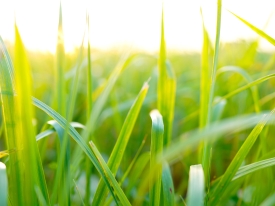
That’s because resetting the plant into vegetative reproduction mode triggers the growth of the all-important daughter tillers. Each original ryegrass tiller can produce up to three daughter tillers. Every one of those daughter tillers can produce a new plant. This plays a central role in increasing sward density.
Sward Density Builds Resilience
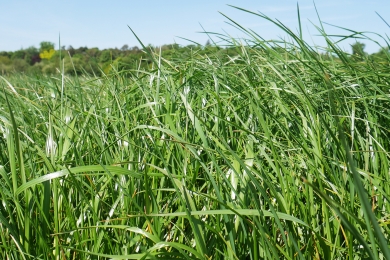
As a grower, use this to your advantage. The denser your sward, the more resilient it is. Any adverse events later in the season, such as a dry period, become less of a worry.
Yes, if a repeat of 1976, or even 2023, comes to pass, you’ll inevitably lose some tillers. But you will have started with more, so you can better afford to lose some. Treat it as an insurance policy that will always pay out.