Why Resilience and Persistence Should Be Your Grassland Goals
We don’t have a crystal ball. That’s exactly why resilience and persistence matter, says Barenbrug’s David Linton.
Extreme and unpredictable weather events have become a familiar challenge for grass producers. Sudden cold snaps, prolonged dry spells, intense rainfall, and heatwaves are no longer unusual—they are part of an increasingly variable climate.
The question is not if we’ll be talking about another weather event, but which one it will be. A spring drought? Exceptionally wet ground conditions? Periods of intense summer heat?
Given how often these scenarios have played out in recent years, it’s clear that trying to predict the next challenge is less important than preparing for it. Because the only certainty is the impact such conditions can have on grass production.
That’s why the focus should be on resilience and persistence. Let’s take a look.
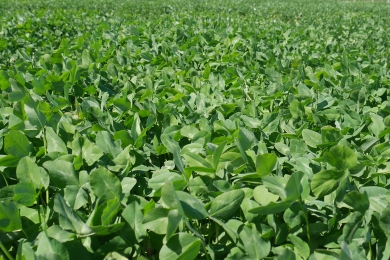
Resilience
For this, read ‘bounceback’. How well – and how fast – will your pastures recover from a shock? In fact, it’s not just about how well they stand up to drought, flooding, or saturated soils; it’s also about everyday management practices – how they’re handled through grazing and silage cutting.
Resilience can be considered in two ways. First, it’s about making the most of what you already have: managing existing pastures to build resilience. Second, it’s about future-proofing – building resilience into every reseeded pasture from the outset.
One of the prime considerations in any resilience strategy is diversity. Every additional species makes a sward more resilient. An overreliance on perennial ryegrass puts all your proverbial eggs in one basket. While it is productive and widely trusted, prolonged moisture stress can significantly limit grazing potential and silage yields.
Resilience shouldn’t stop at the pasture level either. Think about how your entire forage strategy can be designed to cope with variability. Rather than fighting changing conditions, consider adapting to them by widening your forage horizons.
Improved maize varieties with higher starch and better yields, wholecrop cereals, and other alternative forages all have a role to play. Grass should remain the central plank of the system – particularly as higher-yielding, more resilient varieties continue to be developed – but broadening the mix provides greater assurance of both quantity and quality in wet or dry years. Think ‘patchwork’: it’s key to resilience.
When it comes to managing existing forage crops, discipline is crucial. Good grazing rotations and sound silage-cutting practices protect sward health. Overgrazing, keeping stock on waterlogged fields, failing to leave a consistent residual, or cutting when soils are too wet can all weaken the sward and invite weed ingress. And weeds, of course, are the wrong kind of diversity.
Persistence
In general, a more resilient sward will also be more persistent. Persistence refers to how long the original seed mixture remains productive – and how long the preferred species stay in the sward in their intended proportions.
There is often a balance to strike. Diverse, multi-species swards do not always persist in the same way as a perennial ryegrass sward. However, under the right conditions they offer compelling advantages: comparable yields with lower nitrogen demand, forage with higher energy and protein, and strong tolerance to drought.
Any reduction in persistence should not be viewed as a weakness. While outcomes vary from farm to farm, influenced by production goals, labour availability and system design, the savings in fertiliser, fuel and time – alongside improvements in forage quality – can more than offset the cost of periodic overseeding over the lifetime of a multi-species sward.
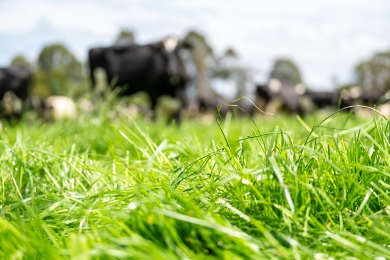
Our Focus
Grassland is a naturally resilient crop, but there is always scope to improve how it is grown, managed and utilised.
That’s why we continue to explore resilience and persistence, and how they can be successfully integrated into modern farming systems. Whether you’re producing milk, raising livestock, or growing essential crops – and grass has a role to play beyond grazing and forage too – Barenbrug has one clear objective: to help UK farmers make grass work harder for them.