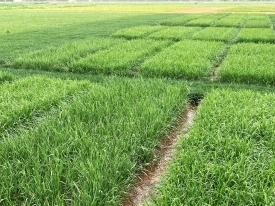
Why More UK Farmers Are Turning To Hybrid Ryegrass
2025 bought another challenging spring and early summer in the UK - marked by dry spells and scattered rainfall, it's clear that grassland strategies need to adapt. For UK farmers, building greater resilience into forage systems is becoming a top priority.
Matt Clark, Agriculture Account Manager for Northern England and The Borders at Barenbrug UK, explains hybrid ryegrasses are stepping up as a practical solution for today’s unpredictable seasons.
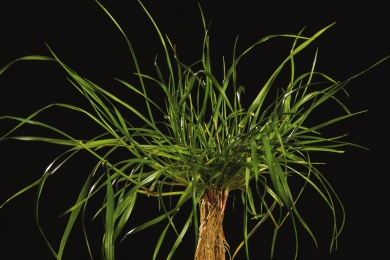
For me, one option that’s proving its worth more and more is the use of Italian × perennial ryegrass hybrids (hybrid ryegrass).
These hybrids combine the best of both worlds: the rapid early-season growth and high yield potential of Italian ryegrass with the improved persistence and grazing tolerance of perennial types. And in a year like 2025, where rainfall comes in short bursts rather than steady spells, that balance is becoming increasingly valuable.

More Than Just Yield – It’s About Timing and Flexibility
One of the key advantages of hybrid ryegrasses is their ability to deliver a substantial first silage cut—often as early as May. This early performance aligns well with systems aiming to secure two high-quality cuts before summer stress sets in, when rising temperatures and limited rainfall can slow growth. However, as seen in 2025, achieving high-quality silage in challenging conditions isn't always straightforward. That’s why having a sward that can maintain growth when other grasses falter is increasingly vital.
Barenbrug’s Hybrid Cut & Graze mixture in particular stands out here. It includes the likes of Bannfoot and Barwave, varieties that deliver that crucial early bite or silage cut while still offering good grazing tolerance, alongside intermediate perennials. It’s a blend that fits seamlessly into a range of systems—whether you’re finishing lambs, pushing daily liveweight gains on beef, or trying to maintain milk yields on a block-calving dairy unit. With the combination of both hybrids and perennials it gives great flexibility in a variety of systems.
Having spoken to a range of farmers in different areas in the north this year, those with hybrids have commented that they are the best performing fields on the farm. This is likely because that with the hot, dry weather causing the ryegrass to struggle and, in some cases, become dormant, it has not been able to make use of the minimal amount of rainfall we have experienced. This is where hybrids can prove beneficial. Whilst they are less drought tolerant than perennials, they are able to respond quicker to rainfall and begin producing leaf matter. Whilst the rainfall experienced may feel insufficient to make an impact, having the right grasses can help mitigate some of the challenges with the weather.
Why It Makes Sense in Dairy Systems
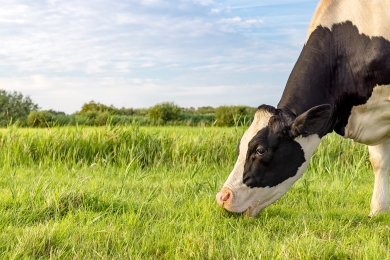
In dairy setups, the benefits are even more apparent. These hybrids produce high-energy, leafy forage—thanks in part to their tetraploid structure—which is highly palatable to cows. This supports higher dry matter intakes, which is often the limiting factor in maintaining or lifting milk yields during grazing periods.
Hybrid swards can contribute to increased milk from forage, simply by offering better digestibility and consistency at key times of the year. During early lactation, when cows are under pressure and spring grass can be variable, having a robust hybrid ley that regrows well and delivers a clean, high-ME bite can make all the difference. Also, by including white clover, there’s a natural protein boost and nitrogen fixation to aid the soil—another tick for milk production without ramping up concentrate use.
An Alternative to Perennial-Only Mixtures
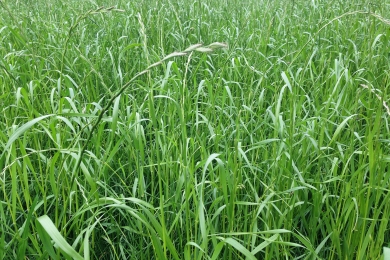
There’s a strong case to be made for perennial ryegrass in UK systems—it’s reliable, long-lasting, proven and high performing when conditions are suitable. Hybrid mixes, particularly in the context of challenging weather patterns, can help systems during demanding periods. Hybrids can improve early season yield and they also regrow more aggressively after short summer showers, which is exactly what we’re dealing with more frequently in the UK. Perennial-only swards are a key part of the system but adding variety across a farm can help when required to react to challenging scenarios like we have faced in 2025. Hybrids seem to switch back on more rapidly, giving you options when you need them most.
An Option Built for Uncertain Summers
With climate uncertainty on the rise, the adaptability of your grass sward matters more than ever. Hybrids offer that middle ground: more yield and flexibility than perennials, more longevity and drought tolerance than pure Italians. Considering a product like Hybrid Cut & Graze, in my view, one of the best examples of how to use this hybrid power properly backed by proven varieties, built for cutting and grazing, and tuned to work across beef, sheep and dairy units. It combines the added benefits of hybrids with perennials for a robust option that can help systems thrive.
If you’re aiming to improve forage quality, boost silage tonnage early, and maintain consistent feed for milk or meat through unpredictable seasons, this type of mixture is hard to beat.
Final Thought
Grassland reseeds can be done with tradition in mind, rather than reflection on what the farm really needs today. But with dry springs becoming the norm, rainfall arriving in short, sharp bursts and weather patterns becoming much more unpredictable and extreme, it’s time to think differently. Hybrids are proving their place on progressive farms—and in my opinion, they’re no longer just an alternative. They’re a front-runner.
Hybrid Cut and Graze
-
Excellent spring growth for a great first cut or strong turnout
-
For cutting & grazing
-
Medium term
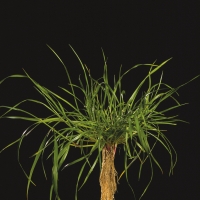
Bannfoot
-
First officially listed in 2018
-
For cutting and grazing
-
Easy to grow, medium term feed option
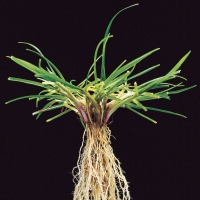
Barwave
-
First officially listed in 2022
-
For cutting
-
Phenomenal yield and quality, particularly early in the season